Should you hold off on Levodopa to avoid dyskinesias later? According to Dr. Theo, DO, a movement disorders specialist with Ascension Neurology Kyle and a CAPS advisor, no.
In this month’s Q&A, he explains what dyskinesias are, why they happen, and why the risk depends more on how Parkinson’s progresses than on when you start levodopa. He also clears up four common myths about levodopa and walks through the ways dyskinesias can be treated.
What are dyskinesias?
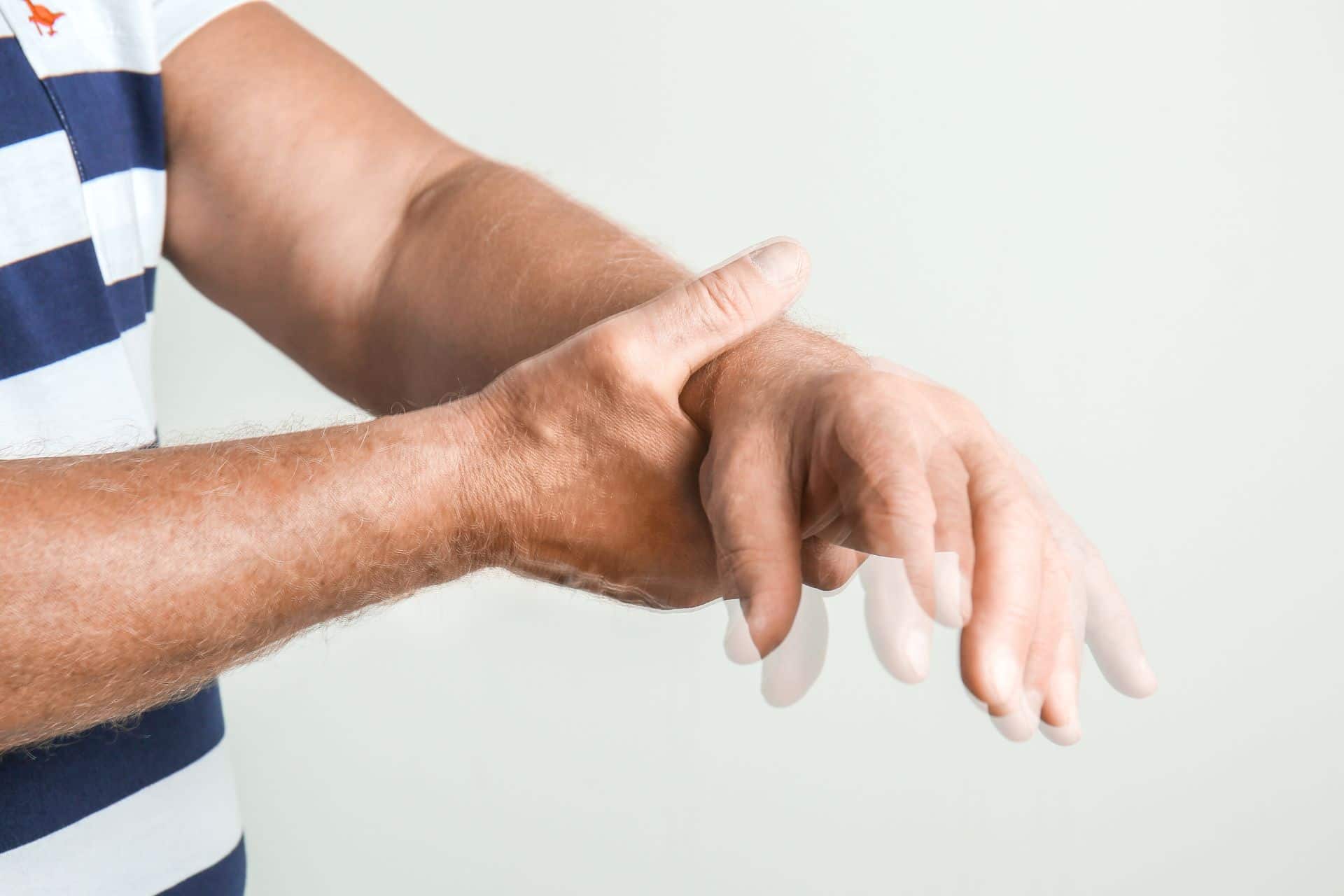
Dyskinesias are involuntary, uncontrolled movements that can affect the face, arms, legs, or trunk. They are often described as appearing “dance-like,” but they can take many different forms. Dyskinesias may look like fidgeting, writhing, wriggling, head bobbing, or swaying of the body. Dyskinesias are different from the tremor caused by Parkinson’s disease itself.
Why do dyskinesias happen?
Several neurotransmitters including dopamine are thought to play a role. In Parkinson’s disease, dyskinesias are most associated with medications that increase dopamine activity in the brain. They often occur when the effect of medication temporarily exceeds the amount needed for good symptom control. Levodopa, which is often considered the most effective medication for treating the motor symptoms of Parkinson’s disease, has the strongest association with dyskinesias.
Other medications that increase dopaminergic activity include dopamine agonists, monoamine oxidase-B (MAO-B) inhibitors, and catechol-O-methyltransferase (COMT) inhibitors. These are generally less associated with dyskinesias but may still contribute to them.
Dyskinesias usually develop after Parkinson’s disease has been present for several years, although the timing varies considerably from person to person.
Should I delay levodopa because of the possible dyskinesia risk?
No. The fear of developing dyskinesias should not be a reason to delay starting levodopa when it is needed to control symptoms.
Historically, some people with Parkinson’s disease have been advised to “save levodopa for later.” This has contributed to levodopa-phobia, or an excessive fear of starting levodopa because of concerns about future complications.
Research has shown that the risk of developing dyskinesias is strongly related to the underlying progression and duration of Parkinson’s disease.
Consider two 60-year-old people who are diagnosed with Parkinson’s disease at the same time and have symptoms that significantly interfere with their quality of life.
Patient A begins levodopa immediately and experiences meaningful improvement in mobility and daily functioning.
Patient B avoids levodopa because of concerns about “using it up” and waits until age 65 to start levodopa.
At age 65, Patient A does not automatically have a higher risk of dyskinesia simply because he has taken levodopa for five years. Both patients have now had Parkinson’s disease for approximately five years and the underlying progression of Parkinson’s disease plays an important role in determining dyskinesia risk. The major difference is that Patient B spent five years living with symptoms that could have been treated with levodopa.
One way to think about this is that the dyskinesia “clock” is influenced more by the progression of Parkinson’s disease than by the date levodopa treatment begins.
Importantly, for most people with Parkinson’s disease, the benefits of levodopa, including improved mobility, independence, and quality of life, far outweigh the potential burden of dyskinesias.
Common Myths About Levodopa
Myth 1: “I should delay starting levodopa as long as possible so I can delay motor fluctuations and dyskinesias.”
False. Delaying levodopa when symptoms are interfering with daily life may mean unnecessarily sacrificing mobility, function, and quality of life. Levodopa should be started when the benefits of treating symptoms outweigh the potential disadvantages of treatment.
Myth 2: “Levodopa eventually stops working because the brain gets used to it.”
False. Levodopa does not simply stop working because the body becomes tolerant to it. The efficacy changes because Parkinson’s disease continues to progress over time. As a result, levodopa doses and timing often need to be adjusted as the disease progresses.
Myth 3: “Levodopa causes intolerable side effects in many people.”
False. Levodopa is generally very well tolerated. Side effects can occur, including nausea, lightheadedness, hallucinations, sleepiness, and dyskinesias, but most people are able to take levodopa successfully with appropriate dose adjustments.
Myth 4: “Levodopa is toxic to brain cells and causes Parkinson’s disease to progress faster.”
False. There is no convincing clinical evidence that levodopa is toxic to dopamine-producing neurons or accelerates the progression of Parkinson’s disease.
How are dyskinesias treated?
Treatment depends on when the dyskinesias occur, how severe they are, and how they relate to the timing of Parkinson’s medications. Some people have mild dyskinesias that do not bother them and require no treatment at all.
When treatment is needed, several approaches may be considered:
1. Adjust the levodopa dose
If dyskinesias occur when levodopa levels are too high, reducing individual doses may decrease dyskinesia. This has to be balanced against the possibility of worsening Parkinson’s symptoms.
2. Adjust the timing of levodopa
Smaller doses taken more frequently, or spacing doses differently, may help reduce large fluctuations in levodopa levels.
3. Change the levodopa formulation
Longer-acting levodopa formulations may help smooth levodopa levels. Continuous levodopa infusion pumps may also reduce fluctuations and troublesome dyskinesias in appropriately selected patients.
4. Adjust other Parkinson’s medications
Medications such as MAO-B inhibitors or COMT inhibitors can sometimes increase dyskinesias by increasing overall dopaminergic activity. Decreasing these medications may help.
5. Consider the timing of dietary protein
Dietary protein can interfere with the absorption of levodopa in some people. Usually this is a disadvantage. However, in selected situations, meal timing and protein intake can be adjusted as part of a broader strategy for managing medication response.
6. Use medications specifically aimed at dyskinesia
Amantadine can reduce levodopa-induced dyskinesias. There is also an extended release formulation of this.
7. Consider surgical treatment
Deep brain stimulation (DBS) and focused ultrasound can be highly effective at reducing troublesome dyskinesias in appropriately selected patients.
The bottom line
Dyskinesias are a common complication in Parkinson’s disease. However, fear of dyskinesias should not prevent someone from receiving effective treatment for Parkinson’s symptoms.
Levodopa remains the most effective medication available for improving the motor symptoms of Parkinson’s disease. For most patients, the improvement in function and quality of life substantially outweighs the potential burden of dyskinesia.
The best strategy for managing dyskinesias is different for every person. Do not change your Parkinson’s medications on your own. Talk with your neurologist or other healthcare professional before adjusting your medications.